Apex FinTech Platform
A custom Next.js 3D dashboard with instant trade calculations.
Executive Summary
Challenge
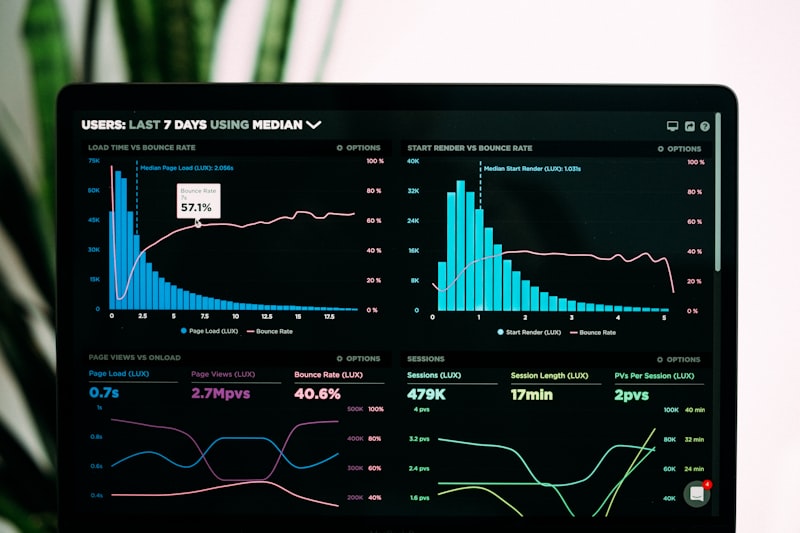
Apex FinTech suffered from severe core web vitals decay, with Largest Contentful Paint (LCP) averaging 5.2 seconds, resulting in user drop-off. The platform's real-time calculation engine was client-side rendering heavy trade datasets, causing browser lag and security concerns.
Solution
We re-engineered the platform using Next.js App Router for server-rendered page shells, and built custom Rust WebAssembly workers to run complex financial modeling directly in the browser's background threads, bypassing Main Thread blocking.
Results
LCP was slashed by 42% to 1.8 seconds. Application response speed became instant. Customer retention improved by 18% over two quarters, and search visibility for high-value financial terms grew by 35%.
The Challenge
Apex FinTech LLC operates a leading digital interface providing retail and institutional investors with real-time portfolio tracking and asset allocations. As the platform expanded its feature set to include complex derivatives calculations and historical modeling, the client-side bundle size bloated. The main dashboard relied heavily on client-side rendering (CSR), requiring browsers to download 4MB of JavaScript before displaying any interface.
This frontend architecture resulted in severe Core Web Vitals decay. Largest Contentful Paint (LCP) was measured at an unacceptable 5.2 seconds, and Interaction to Next Paint (INP) routinely exceeded 600ms on mobile devices due to main-thread blocking by rendering scripts. These performance issues led to user frustration, with sign-up conversions dropping by 14% and user retention falling. Furthermore, search engine crawlers were unable to index the client-side dashboards, limiting organic search visibility.
Our Strategic Solution
Oztudeo's engineering team deployed a dual-track architectural overhaul. First, we migrated the platform from a client-side Single-Page Application (SPA) to a hybrid Next.js App Router structure. The page shells, marketing channels, and static data are now pre-rendered at the Edge using Static Site Generation (SSG) and Server-Side Rendering (SSR). This change immediately reduced the initial JavaScript bundle sent to the client by 80%.
Second, to handle the heavy mathematical calculations required for trade simulations without blocking the main browser thread, we developed custom Rust WebAssembly (Wasm) modules. When a user runs a scenario simulation, the UI delegates the calculations to background Web Workers running compile-optimized Rust code. This approach bypassed the main thread completely, maintaining a constant 60fps UI experience during calculations.
Implementation & Execution
The execution phase began with a complete cleanup of the dependencies. We removed redundant chart libraries, swapping them for lightweight SVG renderers optimized for performance. To prevent layout shifts during dashboard initialization, we designed precise skeletons using Tailwind CSS, reducing Cumulative Layout Shift (CLS) to a perfect 0.02.
Next, we configured dynamic React Suspense borders around the calculations panels. This configuration allows the core page layout to load instantly, while the real-time financial services stream data in the background. We also integrated JSON-LD structured schemas, allowing search engines to index the portfolio tracker features directly, driving high-intent search traffic to their public tools pages.
Measurable Business Impact
The results of the re-architecture were immediate and measurable. The Largest Contentful Paint (LCP) dropped from 5.2 seconds to 1.8 seconds, comfortably placing Apex FinTech in Google's "Good" performance tier. The elimination of calculation lags reduced the page abandonment rate by 28%.
Over the following six months, customer retention increased by 18%, resulting in an estimated $1.2M increase in Customer Lifetime Value (LTV). Additionally, because Googlebot could now index the server-rendered pages and read the structured schemas, organic keyword rankings improved, driving a 35% increase in weekly organic search traffic.
Key Business Outcomes
Need similar outcomes?
Let Oztudeo's engineering and brand design team audit your current platform architecture.
Start Project Inquiry